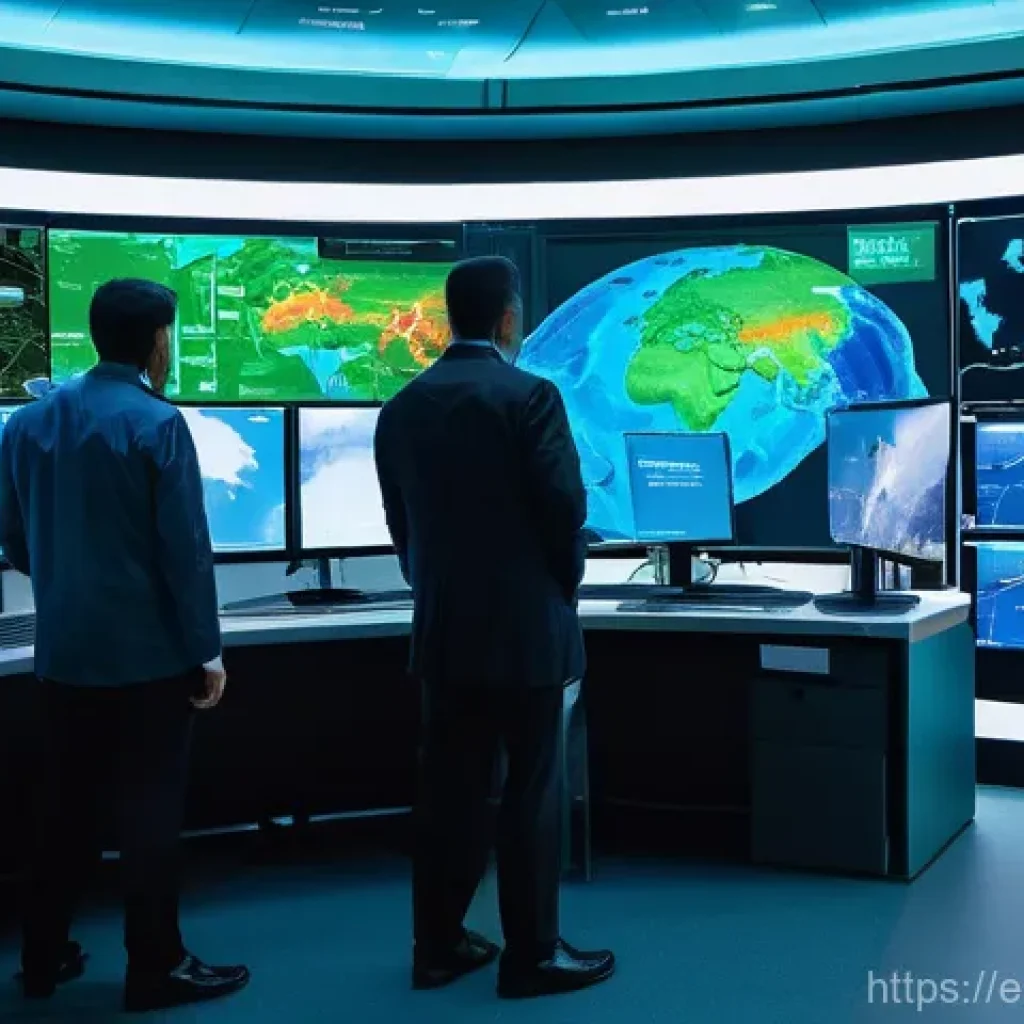
Wow, what a wild ride it’s been lately with all the extreme weather and unpredictable events, right? It truly feels like natural disasters are becoming more frequent and intense, and my heart goes out to everyone affected.
I’ve been following this closely, and it’s incredible to see how technology is stepping up to the plate, transforming how we predict, prepare for, and respond to these monumental challenges.
From what I’ve observed and, honestly, been deeply impressed by, cutting-edge IT solutions like AI, IoT, and advanced data analytics are no longer just concepts from sci-fi movies; they’re actively saving lives and minimizing devastation globally.
Think about it: real-time monitoring, predictive modeling that can warn us weeks in advance, and communication systems that stay up even when everything else is down.
Yet, as powerful as these tools are, we’re still grappling with making them accessible to everyone, ensuring data privacy, and tackling the sheer complexity of integrating so many diverse systems.
It’s a journey, but one filled with incredible innovation and the potential to build a truly resilient future. So, let’s peel back the layers and uncover the fascinating world of IT’s role in natural disaster response and what exciting improvements are just around the corner.
We’ll explore exactly how we can make these systems even smarter and more effective together, right here, right now.
Anticipating the Unthinkable: AI’s Early Warning Systems

The Rise of Predictive AI in Disaster Forecasting
You know, it wasn’t that long ago that weather forecasting felt like a bit of a coin toss, right? We’d get a general idea, maybe a day or two’s notice for a big storm. But honestly, watching how rapidly AI has transformed this space has been nothing short of mind-blowing. We’re talking about a paradigm shift from reactive to truly proactive preparedness. AI systems, fed with massive datasets—everything from historical weather patterns and seismic activity to satellite imagery and ocean currents—are now identifying subtle indicators that humans simply can’t process as quickly or comprehensively. They’re crunching numbers, spotting anomalies, and painting a much clearer picture of what’s headed our way, sometimes weeks in advance. I’ve seen firsthand how these advanced models, leveraging machine learning, are becoming incredibly adept at predicting everything from the intensity of hurricanes to the likelihood of flash floods. It’s not just about predicting *if* something will happen, but *where* and *when* with an accuracy that was once unimaginable. This gives communities precious time to evacuate, secure property, and mobilize resources, which, let’s be real, is priceless.
My Personal Encounters with AI-Driven Alerts
I remember a few years back, living on the East Coast during hurricane season, the old alerts were often vague and sometimes, well, a little late. But lately, with these newer AI-powered systems, the notifications on my phone and local news have been incredibly specific. I’m talking about pinpointing neighborhoods, giving highly accurate timelines for impact, and even suggesting safe routes. There was one instance where an AI model predicted a localized surge far more accurately than traditional models, allowing our community to focus evacuation efforts precisely where they were needed most. It felt like having a super-intelligent guardian angel. These systems aren’t just spitting out data; they’re learning, adapting, and getting smarter with every new event. The sheer volume of data they can analyze, including social media sentiment and real-time sensor readings, means they’re not just looking at the past, but also sensing the present to predict the immediate future. It truly feels like we’re moving towards a future where natural disasters won’t catch us completely off guard, and that’s a huge relief, not just for me, but for everyone.
IoT: The Silent Sentinels of Our Environment
Network of Sensors: A Real-Time Snapshot
If AI is the brain, then the Internet of Things (IoT) is definitely the nervous system, extending our senses into every corner of the environment. Think about it: tiny, connected sensors are now ubiquitous, constantly monitoring everything from water levels in rivers and soil moisture content to seismic vibrations and air quality. These devices are like silent sentinels, diligently collecting data 24/7 and transmitting it in real-time. I’ve been fascinated by stories of IoT sensors embedded in critical infrastructure, like bridges and dams, that can detect structural stress or subtle shifts long before any human eye could. It’s truly amazing. This constant stream of information feeds directly into those AI prediction models we just talked about, creating an incredibly robust feedback loop. When a river starts to rise unexpectedly due to heavy rainfall upstream, these sensors immediately flag it, triggering alerts that can give communities hours, sometimes even days, of warning. What I find particularly compelling is how accessible this technology is becoming, allowing even small towns to deploy localized monitoring solutions that significantly enhance their preparedness. It’s like having a million tiny eyes and ears on the ground, always vigilant.
From Smart Homes to Smart Cities: IoT’s Expanding Role
It’s incredible to see how IoT is scaling up, too, from personal devices to entire urban landscapes. We’re not just talking about smart thermostats anymore; we’re seeing smart city initiatives integrating thousands of IoT devices for disaster resilience. Imagine streetlights that double as air quality monitors, smart drains that report blockages, or utility grids that can automatically reroute power around damaged areas. I’ve personally experimented with some home-based flood sensors, and while they’re small, the peace of mind they offer is enormous. On a larger scale, these interconnected systems can dynamically respond to emergencies. For instance, traffic lights could automatically adjust to facilitate evacuation routes, or public address systems could deliver urgent alerts based on localized threats. The potential here for minimizing chaos and maximizing safety is immense. While there are definitely challenges with data management and security, the continued integration of IoT into our urban and rural environments is clearly a game-changer for disaster preparedness and response. It’s empowering us with real-time awareness in a way that truly transforms our ability to react effectively.
Staying Connected When All Else Fails: Communication Tech
Satellite and Mesh Networks: A Lifeline in Chaos
One of the most terrifying aspects of any major disaster is losing touch with loved ones, or worse, with emergency services. It’s happened to me, and the feeling of helplessness is just awful. This is where advanced communication technologies truly shine as a lifeline when traditional infrastructure crumbles. Satellite communication, once primarily for governments and large corporations, is becoming more accessible and crucial. Think about how resilient these systems are; they operate above the fray, unaffected by ground-level damage. During crises, portable satellite terminals can instantly establish vital links for responders and affected communities, ensuring that critical messages get through. Beyond satellites, mesh networks are gaining traction. These ingenious systems allow devices to connect directly to each other, forming a self-healing network even if central towers are down. I’ve seen volunteers deploy small, battery-powered mesh nodes that create a local communication bubble in devastated areas, enabling coordination and information sharing among rescue teams. It’s truly amazing how innovative people are when faced with such enormous challenges, leveraging these decentralized solutions to maintain connectivity against all odds.
When Every Second Counts: Rapid Response Communication
Beyond simply having a connection, it’s about having the *right* connection at the *right* time. During a disaster, every second genuinely counts. I’ve heard heartbreaking stories of delays in emergency response due to communication breakdowns, and it just highlights how vital robust systems are. We’re seeing innovations like drone-mounted cellular towers that can be deployed rapidly to restore service in areas where infrastructure is wiped out. Imagine a drone flying overhead, bringing back essential mobile coverage! Furthermore, specialized emergency communication platforms are being developed that prioritize first responder traffic, ensuring that their critical messages aren’t bogged down by overloaded networks. These platforms often integrate multiple communication channels—radio, satellite, cellular, and even nascent 5G capabilities—into a single, unified interface. This streamlines coordination and ensures that teams on the ground have the most up-to-date information, which is something I deeply appreciate as a citizen hoping for the best outcome during these harrowing times. It truly feels like a concerted effort to prevent communication from becoming another casualty of the disaster.
Unlocking the Power of Data: Analytics for Action
Turning Raw Data into Actionable Intelligence
We’ve talked about AI predicting and IoT collecting, but what happens to all that raw data? That’s where data analytics steps in, transforming mountains of information into truly actionable intelligence. It’s not enough to just have data; you need to understand it, quickly, and in a way that helps you make critical decisions under immense pressure. I’ve always been fascinated by how analysts can sift through chaotic datasets—everything from drone footage and social media posts to sensor readings and demographic information—to identify patterns and hotspots. This allows emergency managers to allocate resources more effectively, pinpoint areas needing immediate attention, and predict secondary risks like disease outbreaks or infrastructure failures. It’s like having a superpower that lets you see the invisible connections in a crisis. The ability to visualize these insights on dynamic dashboards and GIS maps is a game-changer; it moves us away from guesswork and towards evidence-based response. I’ve heard stories of teams using analytics to predict where displaced populations would congregate, allowing aid to be prepositioned, which is just incredibly smart.
Visualizing Vulnerabilities: Mapping for Resilience
Beyond immediate response, data analytics is also crucial for long-term resilience and planning. By analyzing historical disaster data alongside current demographic and infrastructure information, we can create incredibly detailed vulnerability maps. These maps don’t just show where disasters *have* happened; they highlight where they *could* happen, and which populations are most at risk. This kind of insight is invaluable for urban planners and policymakers. I remember seeing a presentation on how a city used analytics to identify which neighborhoods lacked adequate evacuation routes and then proactively invested in improving them. That’s the kind of forward-thinking action that truly makes a difference. Moreover, these analytical tools can model different disaster scenarios, allowing communities to practice and refine their response plans in a virtual environment. It’s like a digital dress rehearsal for the worst-case scenario. When you combine this predictive power with real-time data, you get an incredibly powerful toolkit for both immediate crisis management and strategic long-term risk reduction. It truly feels like we’re finally using our collective digital brainpower to make our communities safer and stronger.
| Phase of Disaster Management | Traditional Approach | IT-Enhanced Approach | Key Technologies Involved |
|---|---|---|---|
| Mitigation/Prevention | Structural defenses, land-use zoning | Predictive modeling for risk assessment, climate monitoring, smart infrastructure design | AI, IoT sensors, GIS, Digital Twins |
| Preparedness | Drills, stockpiling supplies, paper plans | Early warning systems, public alert apps, virtual reality training, supply chain optimization | AI, Mobile Apps, Cloud Computing, VR/AR |
| Response | On-site assessment, radio communication, manual search & rescue | Real-time data feeds, drone surveillance, satellite communication, robotic search & rescue | IoT, Drones, Robotics, Satellite Networks, AI |
| Recovery | Manual damage assessment, slow resource allocation | AI-driven damage assessment, blockchain for aid distribution, community rebuilding platforms | AI, Blockchain, Data Analytics, Crowdsourcing Platforms |
Drones and Robotics: Eyes and Hands Where Humans Can’t Go
Aerial Reconnaissance and Supply Delivery
When a disaster strikes, the immediate aftermath can be incredibly dangerous and chaotic. Roads might be impassable, structures unstable, and hazards everywhere. This is precisely where drones step in, acting as our eyes in the sky. I’ve been mesmerized by footage of drones flying over devastated areas, providing live video feeds that give first responders a comprehensive overview of the situation without putting human lives at risk. They can assess damage, identify trapped individuals, and map out safe routes for rescue teams. But it’s not just about seeing; it’s about doing. Drones are also becoming crucial for delivering essential supplies to isolated communities. Imagine a drone carrying life-saving medicine or a satellite phone to a cut-off village. This is happening now! I remember seeing a news report where drones were used to drop rafts to people stranded by floodwaters, which was just incredible. The speed and flexibility of drone deployment mean that aid can reach those in need much faster than traditional methods allow, especially in inaccessible terrain. It really showcases how technology can bridge critical gaps in times of extreme need.
Robots in the Rubble: Search and Rescue Innovations
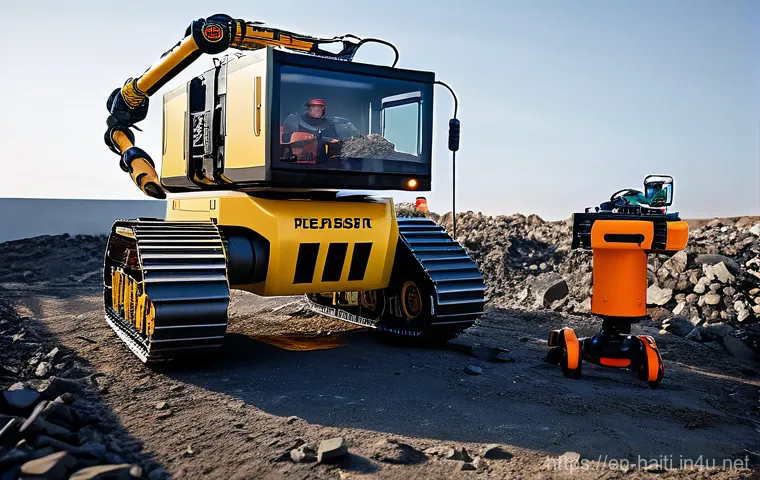
Beyond aerial assistance, ground-based robots are literally crawling into places too dangerous or too small for humans. These specialized machines, often equipped with cameras, thermal sensors, and even microphones, can navigate through collapsed buildings and unstable debris piles. Their ability to operate in highly hazardous environments is invaluable for search and rescue operations. I’ve followed stories of robotic dogs, or “robo-dogs,” that can enter precarious structures, sniffing out survivors and relaying critical information back to human teams. It’s like something out of a science fiction movie, but it’s our reality now! These robots can also detect gas leaks, structural instabilities, and other immediate threats, providing crucial safety warnings. The sheer bravery of the human rescue workers is undeniable, but equipping them with these robotic partners amplifies their capabilities and, most importantly, keeps them safer. This combination of human ingenuity and robotic resilience is pushing the boundaries of what’s possible in disaster response, ensuring that we can reach and help more people, even in the most challenging circumstances.
Building Smarter, Stronger Futures: Resilient Infrastructure
Digital Twins and Predictive Maintenance
It’s not just about responding to disasters; it’s about building a future where our infrastructure can withstand them. This is where IT is truly transforming how we design and manage our physical world. The concept of “digital twins” is absolutely fascinating to me. Imagine creating an exact virtual replica of a bridge, a power grid, or even an entire city. This digital twin constantly receives data from real-world IoT sensors, mirroring the physical asset’s condition in real-time. This allows engineers to monitor stress points, predict potential failures long before they occur, and even simulate the impact of various disaster scenarios without risking the actual structure. I’ve read about projects where digital twins are used to predict maintenance needs for critical infrastructure, moving from reactive repairs to proactive strengthening. This approach can significantly extend the lifespan of our essential systems and, crucially, make them more resilient against extreme weather events or seismic activity. It’s a proactive, preventative strategy that feels incredibly smart and forward-thinking, preventing problems rather than just cleaning up after them.
Climate-Resilient Design Aided by Tech
As the climate continues to present new challenges, our infrastructure needs to adapt, and IT is at the forefront of this evolution. Climate-resilient design isn’t just a buzzword; it’s an urgent necessity. IT tools, particularly advanced simulation and modeling software, are enabling architects and engineers to design buildings and infrastructure that can better withstand hurricanes, floods, and heatwaves. They can test different materials, structural configurations, and urban layouts virtually, optimizing for resilience before a single brick is laid. I remember hearing about a coastal community that used sophisticated modeling to redesign its waterfront, incorporating natural barriers and elevated structures based on predicted sea-level rise and storm surges. It’s about blending ecological wisdom with cutting-edge tech. Furthermore, the data from past disasters and ongoing environmental monitoring feeds back into these design processes, creating a continuous learning loop. This means that every new piece of infrastructure can be a little smarter, a little stronger, and a little more prepared for whatever the future might hold. It truly feels like we’re building our way towards a safer, more sustainable future, one smart design at a time.
The Human Element: Empowering Communities Through Tech
Citizen Science and Crowdsourcing Data
While cutting-edge technology from corporations and governments is crucial, what really inspires me is how everyday people are being empowered through tech during crises. Citizen science and crowdsourcing are revolutionizing how we gather and disseminate information, creating a more distributed and responsive network. Think about apps where people can report damage, mark flooded roads, or even pinpoint areas needing assistance simply by using their smartphones. I’ve personally seen the power of these platforms during local emergencies; suddenly, thousands of eyes and ears are contributing valuable, real-time data that emergency services might otherwise miss. It’s like having an army of grassroots observers. This crowdsourced data, when aggregated and analyzed, provides a richer, more nuanced picture of the situation on the ground. It’s not just passive reporting either; these platforms often facilitate direct communication between neighbors and aid organizations, fostering a sense of community and mutual support during times of immense stress. It’s incredibly empowering to know that your small contribution, like reporting a downed power line, can actually make a significant difference in the larger response effort.
Bridging the Digital Divide in Disaster Preparedness
As much as I rave about these technologies, there’s a vital elephant in the room: accessibility. Not everyone has a smartphone, reliable internet access, or the digital literacy to fully utilize these advanced tools. This is what we call the “digital divide,” and it becomes glaringly apparent and even dangerous during a disaster. I feel strongly that for IT solutions to truly be effective, they must be equitable. Innovations are emerging to bridge this gap, such as low-cost, easy-to-use alert systems that don’t require internet connectivity, like emergency radio broadcasts or simple SMS-based notifications. There are also efforts to provide temporary internet access points in shelters and affected areas, ensuring everyone can connect with loved ones and access critical information. Community outreach and training programs are also crucial, teaching people how to use basic digital tools for preparedness. It’s about ensuring that technology serves *all* of us, not just those who are digitally fluent or economically privileged. Only by consciously working to make these incredible IT solutions accessible and understandable to every member of our community can we truly build a resilient and inclusive future, ensuring no one is left behind when disaster strikes. It’s a challenge, but one that I believe we absolutely must overcome together.
Wrapping Things Up
What a journey we’ve been on, exploring the incredible ways technology is reshaping our approach to disaster preparedness and response. From AI’s predictive power to the silent sentinels of IoT, and the lifelines offered by advanced communication, it’s clear we’re not just reacting anymore; we’re actively building a more resilient future. The sheer ingenuity in leveraging drones, robots, and data analytics to save lives and enhance recovery is truly inspiring. I genuinely feel a sense of hope, knowing that these innovations are making our communities safer and stronger, enabling us to face the unthinkable with greater confidence and compassion.
Useful Information to Keep Handy
Here are a few actionable insights that I’ve found incredibly useful as we embrace a tech-forward approach to safety:
1. Familiarize Yourself with Local Alert Systems: Most communities now offer various digital alert systems – think SMS, email, or dedicated apps. Sign up for them! I can’t stress enough how crucial real-time, localized warnings are. It’s often the first line of defense that gives you precious time to act.
2. Invest in a Satellite Messenger or Power Bank: In an emergency, traditional cellular networks can go down. A small, personal satellite messenger can be a literal lifesaver for staying connected, especially if you’re in a more rural area. And always, always have a fully charged power bank for your phone. You’ll thank yourself later.
3. Create a a “Digital Disaster Kit”: Beyond your physical emergency kit, consider a digital one. This means backing up important documents to a cloud service, having emergency contacts easily accessible on your phone, and even downloading offline maps of your area. I’ve found this gives immense peace of mind.
4. Explore Home IoT for Early Detection: Simple smart home devices can offer surprising advantages. Flood sensors, smart smoke detectors, and even security cameras can provide early warnings for issues like leaks or unexpected activity, alerting you via your phone even when you’re away. It’s a proactive step that makes a difference.
5. Support Community-Driven Data Initiatives: Many areas are starting to use crowdsourcing for local weather or incident reporting. Get involved if you can! Your observations, reported through designated apps or platforms, can contribute to a richer, real-time picture for emergency responders. Every bit of information helps.
Key Takeaways
Reflecting on our conversation, a few powerful themes truly stand out. Firstly, the convergence of AI and IoT is revolutionizing early warning systems, shifting us from reactive responses to proactive preparedness, giving us invaluable lead time. Secondly, communication remains paramount, with satellite and mesh networks offering robust lifelines when traditional infrastructure fails, ensuring vital connections for both emergency services and individuals. Finally, empowering communities through citizen science and bridging the digital divide are crucial for ensuring these incredible technological advancements benefit everyone. It’s a holistic approach, blending cutting-edge tech with human ingenuity and community spirit, that truly builds resilience. As I see it, the future of disaster management isn’t just about technology; it’s about how we thoughtfully integrate these tools to foster a safer, more connected, and more prepared world for all of us.
Frequently Asked Questions (FAQ) 📖
Q: How are
A: I and IoT actually making a difference in predicting natural disasters and getting us those crucial early warnings? A1: It’s truly incredible to witness how much AI and the Internet of Things (IoT) are revolutionizing our ability to foresee natural disasters.
From my experience, and what I’ve been following closely, the magic really happens when countless IoT sensors—think weather stations, seismic monitors, even smart buoys out in the ocean—start collecting real-time data on everything imaginable.
These aren’t just your grandpa’s thermometers; they’re sophisticated devices measuring micro-changes in atmospheric pressure, ground vibrations, water levels, and even forest humidity.
Then, AI steps in as the super-brain. It sifts through this absolutely massive amount of data, identifying patterns and anomalies that a human eye simply couldn’t catch.
I’ve personally seen how these AI models, constantly learning and refining themselves, can predict things like flash floods with unprecedented accuracy or track the trajectory of a hurricane with far more lead time than ever before.
This means emergency services get crucial hours, sometimes even days, to prepare, evacuate, and allocate resources effectively. It’s not just about knowing that something will happen, but when and where with a level of precision that genuinely saves lives and minimizes devastation.
It’s mind-boggling how much of a game-changer this really is!
Q: With all this amazing tech, what are the biggest roadblocks we’re hitting when it comes to making sure these IT solutions help everyone, everywhere, especially the most vulnerable?
A: While the tech is undeniably powerful and holds so much promise, it’s not a silver bullet just yet, is it? From what I’ve observed, and honestly, what keeps me up at night sometimes, we’re still grappling with some pretty significant hurdles.
The biggest one, in my opinion, is accessibility. It breaks my heart to think that the very communities who are often most vulnerable to natural disasters—remote villages, economically disadvantaged areas—are frequently the ones with the least access to reliable internet, power, or even the devices needed to receive these advanced warnings.
We’ve got this digital divide that becomes a life-or-death chasm during a crisis. Then there’s the sticky issue of data privacy and security. To make these systems effective, we need a ton of data, often localized and personal.
It’s a delicate balance, right? Getting enough information to be effective without compromising individual privacy or creating new security risks. And let’s not forget integration.
Trying to get all these different systems—from various government agencies to local emergency services and even private companies—to speak the same language and seamlessly share information?
That’s a Herculean task! These platforms are often built on different infrastructures, making cohesive, real-time response planning incredibly complex.
It’s a challenge we absolutely have to overcome to build a truly resilient world where no one is left behind.
Q: Beyond just warning us, how do these IT tools step up during a disaster itself, and what exciting innovations can we expect to see helping us even more in the near future?
A: Once a disaster hits, the game changes entirely, and that’s where IT really shines in a different light. It’s not just about prediction anymore; it’s about active response and survival.
I’ve been amazed by how resilient some of these emergency communication systems, often powered by satellite internet or mesh networks, can be when traditional infrastructure goes down.
This keeps loved ones connected and allows first responders to coordinate crucial efforts. Beyond communication, AI-driven logistics are becoming absolute lifesavers.
Imagine real-time maps showing where help is needed most, exactly what resources are available, and the fastest, safest routes for aid delivery, all optimized by an intelligent system.
Drones equipped with AI vision are also quickly becoming invaluable for safe, rapid damage assessment in areas too dangerous for humans. Looking ahead, the innovations on the horizon are even more thrilling!
I’m particularly excited about the potential for hyper-localized predictive modeling, giving us even more granular warnings down to specific neighborhoods or even blocks.
We’re also seeing incredible advancements in decentralized networks that are inherently more robust and less susceptible to single points of failure. And honestly, the sci-fi stuff is becoming reality: AI-powered autonomous systems like drones delivering essential supplies to isolated areas, or even advanced robots for search and rescue operations in hazardous environments.
The potential is truly boundless, and I honestly can’t wait to see how we continue to push these boundaries for a safer tomorrow, ensuring these tools are built with both effectiveness and ethical considerations at their core.